Introduction
In Florida’s hot and humid climate, airflow and ventilation play a critical role in the comfort, safety, and efficiency of institutional buildings such as schools, hospitals, government offices, and universities. During renovations, improving ventilation isn’t just a design choice; it’s often a necessity. With rising awareness about indoor air quality, energy efficiency, and public health, building managers and renovation teams must prioritize modern ventilation solutions.
This guide explores effective ways to enhance ventilation in Florida institutional buildings during renovation projects. From upgrading HVAC systems to incorporating natural airflow strategies, we’ll highlight solutions that improve occupant well-being while meeting Florida’s stringent building codes.
1. Why Ventilation Is Crucial in Florida’s Climate
Florida’s environment presents unique challenges for building design and renovation:
- High Humidity: Excess moisture can lead to mold and mildew growth.
- Heat: Without proper airflow, indoor spaces quickly become uncomfortable.
- Airborne Contaminants: Poor ventilation can trap allergens, pollutants, and even viruses indoors.
For institutional buildings where large groups of people gather daily, effective ventilation systems are essential for health, comfort, and compliance with ASHRAE (American Society of Heating, Refrigerating and Air-Conditioning Engineers) standards.
2. Conducting an Airflow and Ventilation Assessment
Before making improvements, renovation teams should perform a ventilation audit. This includes:
- Measuring airflow rates in different areas.
- Identifying areas with stagnant air or insufficient circulation.
- Inspecting existing HVAC systems for inefficiencies.
- Testing indoor air quality (IAQ) for humidity, carbon dioxide, and pollutant levels.
This baseline helps define renovation goals and ensures upgrades target actual problem areas.
3. Upgrading HVAC Systems for Efficiency and Air Quality
One of the most impactful improvements is modernizing HVAC systems. In Florida, outdated systems often struggle to balance humidity control with energy efficiency.
Key Upgrades Include:
- High-Efficiency Units: ENERGY STAR-rated systems lower energy costs.
- Variable Air Volume (VAV) Systems: Adjust airflow based on occupancy.
- Enhanced Filtration: MERV 13+ filters capture fine particles, improving IAQ.
- UV-C Light Technology: Installed in ducts, UV-C helps neutralize airborne pathogens.
These upgrades not only improve airflow but also meet Florida’s green building initiatives.
4. Integrating Natural Ventilation Strategies
While HVAC systems are vital, natural ventilation can supplement airflow and reduce reliance on mechanical systems.
Options include:
- Operable Windows: Especially in classrooms and offices, windows allow fresh air circulation.
- Cross Ventilation: Strategic placement of windows and vents allows air to flow naturally.
- Atriums & Courtyards: Open spaces enhance airflow in multi-story buildings.
For Florida renovations, natural ventilation must be balanced with humidity control to prevent moisture-related issues.
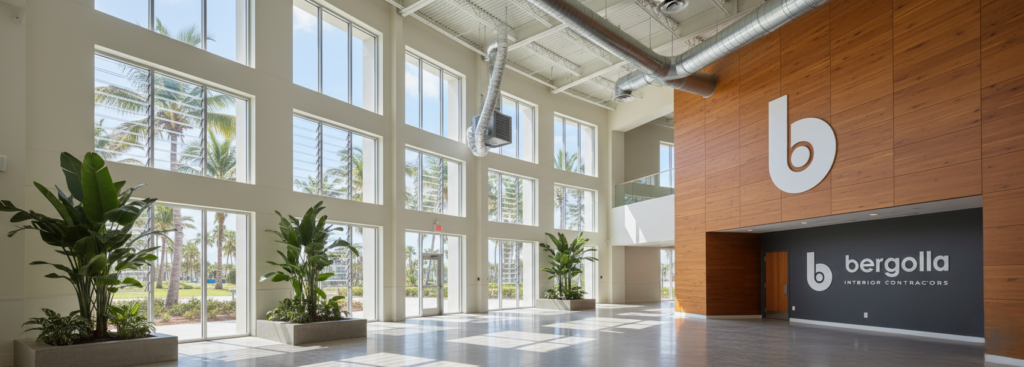
5. Adding Energy Recovery Ventilation (ERV) Systems
ERV systems are particularly beneficial in humid climates like Florida’s. They exchange stale indoor air with fresh outdoor air while recovering energy from outgoing air.
Benefits Include:
- Improved indoor air quality.
- Reduced load on HVAC systems.
- Lower energy consumption.
This solution is ideal for large institutions like hospitals and universities, where continuous ventilation is required without skyrocketing utility bills.
6. Smart Ventilation Controls
Modern technology allows building managers to optimize airflow with smart controls. These systems:
- Monitor occupancy and adjust airflow automatically.
- Provide real-time IAQ data through sensors.
- Reduce unnecessary energy consumption during off-hours.
For Florida’s institutional buildings, integrating smart technology ensures ventilation is both responsive and cost-efficient.
7. Addressing Humidity with Dehumidification Systems
Humidity is a persistent challenge in Florida. Without proper management, excessive moisture can lead to mold growth, material degradation, and health risks.
Renovations should include:
- Standalone Dehumidifiers: Installed in problem areas.
- Integrated HVAC Dehumidification: Advanced systems that regulate both temperature and humidity.
- Moisture Barriers & Sealants: Used in walls and windows to minimize outdoor humidity infiltration.
These measures protect institutional spaces from the long-term effects of excess moisture.
8. Improving Ventilation in High-Density Areas
Institutional buildings often have spaces with high occupant density, such as:
- Classrooms
- Cafeterias
- Gymnasiums
- Auditoriums
During renovations, these areas require enhanced ventilation strategies, including higher airflow rates, upgraded filtration, and strategically placed exhaust systems. This is particularly important for controlling airborne pathogens in post-pandemic building standards.
9. Meeting Florida Building Codes and Standards
Florida has strict regulations for ventilation and indoor air quality in institutional spaces. During renovations, compliance is critical.
Key standards include:
- ASHRAE 62.1: Ventilation for Acceptable Indoor Air Quality.
- Florida Building Code (FBC): Governs HVAC design and implementation.
- LEED Certification Standards: Encourages sustainable, energy-efficient ventilation.
Hiring experienced professionals ensures upgrades not only improve airflow but also meet legal and safety requirements.
10. Long-Term Benefits of Improved Ventilation
Investing in ventilation upgrades during renovation offers lasting benefits:
- Healthier Environments: Reduces the spread of illness, allergens, and pollutants.
- Energy Savings: Efficient systems cut down on monthly utility bills.
- Increased Comfort: Balanced airflow enhances occupant satisfaction.
- Future-Proofing: Modern systems make buildings adaptable to new standards and technologies.
For Florida’s institutions, this translates to healthier communities, better learning and working environments, and significant cost savings.
Conclusion
Improving airflow and ventilation in Florida’s institutional buildings during renovation is more than just an upgrade; it’s an essential investment in health, safety, and efficiency. From HVAC upgrades to natural ventilation strategies, ERV systems, and humidity control, the right combination of solutions can transform outdated buildings into safe, sustainable, and comfortable spaces.
Call to Action
Planning a renovation for your school, hospital, or institutional building in Florida? Don’t overlook the importance of ventilation. Contact our expert team today to design and implement a custom airflow solution that meets Florida’s climate challenges and building standards. Breathe easier knowing your facility is safe, efficient, and future-ready.